








Pursuing Net Zero Emissions by 2050
Cruise lines are actively pursuing net zero emissions by 2050, consistent with the International Maritime Organization’s (IMO) 2023 Strategy on Reduction of Greenhouse Gas (GHG) Emissions from Ships.
In late 2021, CLIA announced that its member cruise lines collectively pledged to pursue net-zero emissions by 2050, underscoring a strong, industry-wide commitment to environmental responsibility and sustainability.
How Cruise Lines Plan to Achieve Net-Zero
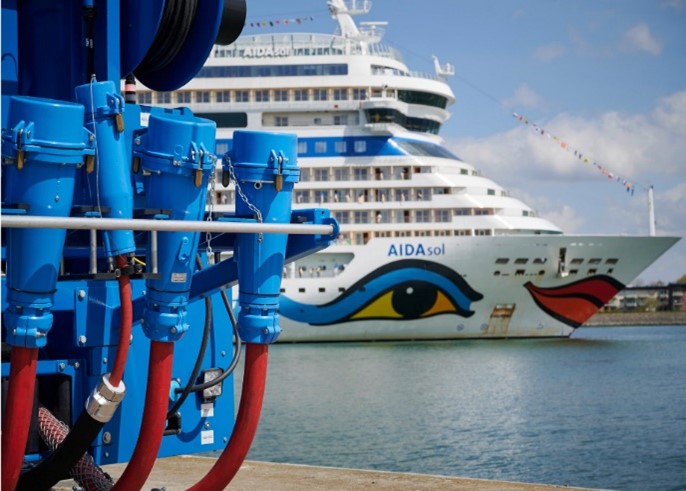
- Reducing emissions at berth and at sea (technologies, infrastructure and operational efficiencies)
- Investing in new ships and engines that allow for fuel flexibility to use low- to zero-GHG fuels, once available at scale
- Conducting multiple trials and pilot programs to test sustainable fuels and technologies.
- Employing a range of environmental technologies and practices to advance sustainability initiatives.

How Tourism Can Forge a Path to Net Zero
During COP27 held in Egypt last month, the United Nations World Tourism Organisation (UNWTO) urged the tourism industry to take urgent action to reach net zero, and discussed the pathways to achieve measurement and decarbonisation, as well as regeneration and finance.According to the latest “United in Science” Report, CO2 emissions are on the rise with atmospheric greenhouse gas (GHG) concentrations reaching record levels driving rapid climate change which in turn threatens our way of life on earth. There is an urgent need to for every individual or corporate to take action.Nobody can afford to be complacent as climate change intensifies and takes a toll on socio-economic development.Common challenges across our industry to reach our net zero targets range from accurate emission measurement and reporting, to a fragmented regulatory landscape, insufficient budgets or hard to replace infrastructure.There are subsectors where costs for transformation can be prohibitive, resulting in a long-transition to net zero. Such is the case for asset-heavy sectors in the travel and tourism industry: aviation, cruise or hotels where it will take time to implement infrastructure improvements, or switch to hydrogen or electric powered solutions to reduce absolute carbon emissions.As global leaders shift their attention to climate finance, COP27 saw US$4 to $6 trillion a year committed for investments in technology and infrastructure. Therein lies an opportunity to simultaneously tackle climate change and drive digitalisation in Southeast Asia where 4 out of 11 unicorns come from Travel & Hospitality.Concurrently, consumer sentiments are changing – often ahead of regulatory changes. Travellers are becoming more conscious of their environmental footprint and are looking for more sustainable travel options.These factors together means industries should take the lead, and act ahead of government policy.To play our part and drive the future resilience of tourism, our fund invests in high growth startups, from Seed to Series A. We take a sector-strategic expertise approach and employ institutional financial discipline to seek out new projects for economic diversification and market-creation.We hope to galvanise more organisations within our industry to invest in our future collectively, and place future considerations about how business can reduce greenhouse gas emissions and achieve carbon neutrality with investments in long-term and systemic change.For example, hoteliers can invest in technology and transform their properties to be less reliant on fossil fuels. Contributing to regenerative projects that protect forests and coastal ecosystems can also help companies reduce their carbon footprint.Velocity Ventures has recently invested in New Zealand enviro-tech company CarbonClick that offers corporates and consumers options to off-set the carbon foot print associated with their travel. They offer high-quality carbon offset programmes by showing where and how their contributions have been used with a “track and trace” feature providing full details of the offset.While voluntary offsets provides a proactive solution for corporates and consumers to stay ahead of slower moving industry schemes or government regulation, it is also important for tourism businesses to shift investment and financing towards decarbonising our planet’s future.Entrepreneurs will play a key role in achieving our industry’s transformation to Net-Zero, bringing to market the technologies that are needed to drive this change. Velocity Ventures is committed to supporting their ambitions, taking pro-active steps to invest and help grow their companies and the technologies that will allow us to achieve a low carbon world.To find out more about what other tourism organisations are doing to reach their Net-Zero goals, download our report here. February 01, 2023
Fit for 55 Statement by CLIA Europe (Euro)
The “Fit for 55” package is a significant step towards the acceleration of the EU’s decarbonisation efforts. The cruise industry supports the long-term objectives of the EU Green Deal, and we are committed to pursuing net carbon neutral cruising in Europe by 2050. Furthermore, by driving innovation through shipbuilding in Europe, we believe the cruise industry has a decisive role to play as an enabler of European green growth, as enshrined in the EU Green Deal and EU Recovery Plans.A balanced and proportional regulatory framework for all sectors of the economy can pave the way to achieve the EU goal of carbon neutrality by 2050. It is also essential to address the complexities of such a substantial package of regulations by adopting a holistic impact assessment, because different elements of Fit For 55 will all impact each other.The cruise industry operates mobile assets globally, with ships sailing between countries and continents, with flexible itineraries and ships often transiting through European waters for limited periods at a time. Special attention should be given to assessing impacts of Fit For 55 on remote European coastal regions and islands that depend heavily on passenger shipping.A phased-in approach and a realistic implementation timeline will be essential to ensure the European maritime cluster has a chance to recover from the negative economic impact of COVID-19 crisis on this sector. CLIA Europe is committed to contributing to the policy discussion and making its expertise and experience available, partnering with all actors in the EU Institutions and member states to accelerate the development of alternative marine fuels that will be necessary for achieving the EU’s and CLIA’s decarbonisation ambitions.Ukko Metsola, Director General at CLIA Europe:“The cruise industry supports the long-term objectives of the EU Green Deal, and we are committed to pursuing net carbon neutral cruising in Europe by 2050. The introduction of carbon pricing will not alone solve the underlying core challenge, however, which is the lack of alternative marine fuels. Further political and regulatory attention will be needed to accelerate the development of alternative fuels and making them available for bunkering in European ports.The cruise industry is a European success story, as European shipyards maintain global competitiveness in cruise shipbuilding. This reality offers a significant opportunity to generate green growth and job creation in the European waterborne sector.The cruise industry operates mobile assets globally, with ships sailing between countries and continents, with flexible itineraries and ships often transiting through European waters for limited periods at a time. Special attention should be given to assessing impacts of the Fuel EU Maritime proposal on remote European coastal regions and islands that depends heavily on passenger shipping. A realistic implementation timeline of the Fit For 55 will be essential to ensure the European maritime cluster has a chance to recover from the negative economic impact of COVID-19 crisis on this sector.” July 14, 2021