





Shipping Industry United in Support of IMO as Its Global Regulator and Successful Implementation of IMO GHG Reduction Pathway

In advance of a critical meeting of the International Maritime Organization (IMO) Marine Environment Protection Committee (MEPC 84), this statement is made jointly on behalf of BIMCO, CLIA, ICS, INTERCARGO, INTERFERRY, INTERTANKO and WSC, representing the global commercial shipping fleet.
Following the postponement, in October 2025, of the adoption of new IMO greenhouse gas (GHG) regulations, the shipping industry highlights the vital importance of IMO Member States agreeing on a way forward.
The IMO consistently demonstrates a unique ability to deliver critical regulations for the safety and security of international shipping and protection of the marine environment.
The industry remains unified in its commitment to the value and effectiveness of the IMO as the global regulator for international shipping and remains committed to pursuing the ambition established within the 2023 IMO Strategy on Reduction of GHG Emissions from Ships, having invested and committed billions of dollars to trial and implement the use of alternative fuels and innovative technology.
Industry supports consideration of practical and effective IMO solutions with consistent global application while avoiding diverse and/or overlapping regional and national decarbonization schemes, which could result in double or multiple penalties being imposed on ships for the same GHG emissions. Member States are therefore encouraged to consider all options to achieve a global agreement.
The significant work already underway on related subjects such as fuel lifecycle assessment and certification schemes must deliver the technical foundation and clarity for consideration of adoption of any measure. Progress must take due regard for which aspects should be adopted by regulation, and which can be reserved for IMO Guidelines.
Decision-making must be data-driven and fuel/technology neutral, taking into account availability and safety of alternative fuels, and requirements that are solely focused on maritime decarbonization.
Measures adopted should ensure the viability of transitional fuels such as LNG, LPG and sustainable biofuel blends; other alternative fuels including e-fuels, biomethanol, biomethane, sustainable bioethanol and ammonia; as well as technologies such as wind, battery storage, shore power, nuclear, and onboard carbon capture. Notwithstanding legitimate questions about the safety and feasibility of some of these alternatives, their potential to provide an immediate reduction of emissions should be recognized.
The IMO requirements should provide the global regulatory certainty that the maritime industry urgently needs and send sufficient signals to energy producers to accelerate production and supply. Industry also underlines the need for practicable enforcement of the new rules to secure the intended reduction of GHG emissions and a level playing field across the industry.
Noting that decarbonization of the maritime sector is a multi-stakeholder endeavor that cannot be achieved by shipowners alone, the industry stands by the IMO and is committed to providing meaningful and constructive input to assist IMO Member States in developing fit-for-purpose regulations to deliver the strategic vision of the Organization.
End
Notes to Editors
About BIMCO
BIMCO is the world's largest international shipping association, with 2,100 members in 120 countries, representing two-thirds of the world fleet by DWT. Its global membership includes shipowners, operators, managers, brokers and agents. BIMCO is a non-profit organization.
www.bimco.org
Media contact: Mette Kronholm Frænde – [email protected]
About the Cruise Lines International Association (CLIA)
Cruise Lines International Association (CLIA) is the leading authority of the global cruise community. CLIA members and partners include the world’s most prestigious ocean, river and specialty cruise lines; a business community of leading ports, destinations, shipyards and maritime product and service providers; and the largest network of travel professionals who specialize in cruise travel. Together with its members and partners, CLIA supports policies and practices that foster safe, secure, healthy and sustainable cruise operations; tourism strategies that maximize the socioeconomic benefits of cruise travel; and technologies and innovations designed to support the industry’s pursuit of net zero emissions by 2050.
For more information, visit cruising.org or follow CLIA on LinkedIn, Facebook, Instagram, X (formerly Twitter) and YouTube.
Media contact: Anne Madison – [email protected]
About INTERCARGO
The International Association of Dry Cargo Shipowners (INTERCARGO) unites and promotes quality dry bulk shipping, bringing together more than 460 companies operating over 4,600 bulk carriers from more than 35 countries. The Association provides a forum for shipowners, managers and operators to discuss key topics and challenges and promotes its members’ positions at the IMO, EU and other industry fora.
www.intercargo.org
Media contact: Cyndi Cheng – [email protected]
About Interferry
Interferry is the global ferry trade association with consultative status at the IMO and influence at the European Union and other maritime authorities. With more than 280 member companies and over 2,200 individuals across 40+ countries, it represents the worldwide ferry sector transporting over four billion passengers and 370 million vehicles annually.
www.interferry.com
Media contact: Tim Kötting – [email protected]
About ICS
The International Chamber of Shipping (ICS) is the principal global trade association for merchant shipowners and operators, representing all sectors and over 80% of the world’s merchant fleet.
www.ics-shipping.org
Media contact: Katerina Dimitropoulos – [email protected]
About INTERTANKO
INTERTANKO, the International Association of Independent Tanker Owners, has represented independent tanker owners since 1970. As of January 2026, it has 191 members operating over 4,100 tankers totaling more than 380 million DWT, along with 236 associate members.
www.intertanko.com
Media contact: Jon Chaplin – [email protected]
About WSC
The World Shipping Council represents global liner shipping, including container and vehicle carriers supporting global trade. It works with policymakers and stakeholders to advance a safe, secure and sustainable shipping industry.
www.worldshipping.org
Media contact: Anna Larsson – [email protected]
Relevant News
Welsh First Minister celebrates contribution of cruise tourism to Wales during ship visit in Holyhead
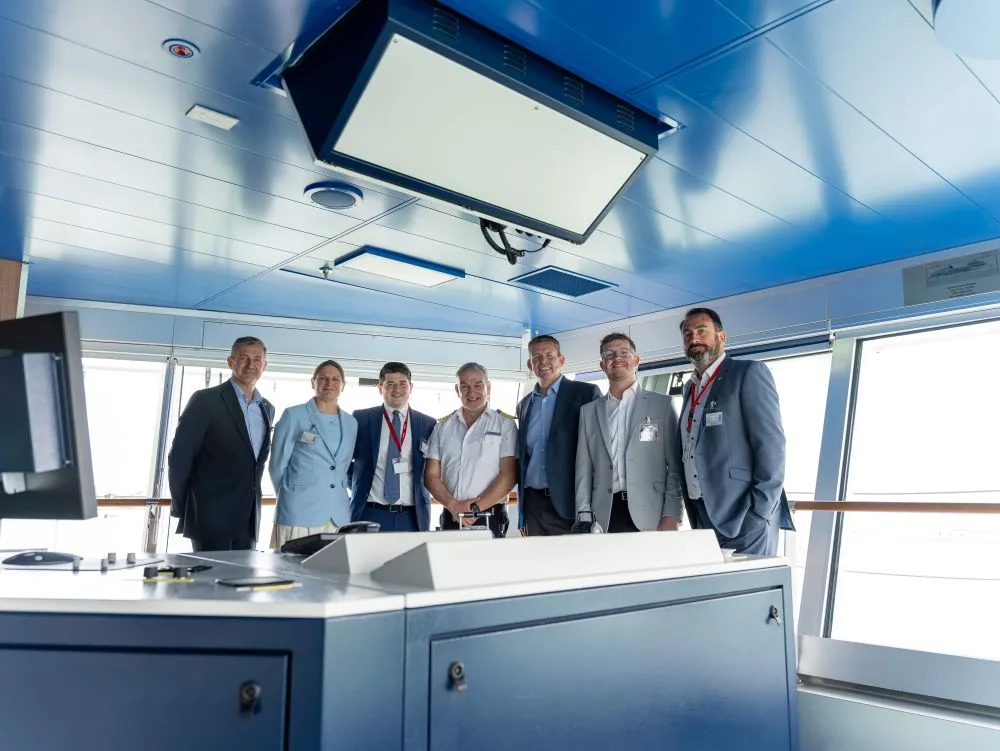
The Welsh First Minister, Rhun ap Iorwerth, has hailed cruise tourism as a key driver of the Welsh visitor economy during his first official engagement with the sector since taking office, signalling continued government support for cruise in Wales.On Friday, the First Minister joined Cruise Lines International Association (CLIA) and other industry representatives onboard Regent Seven Seas Cruises’ Seven Seas Grandeur in Holyhead, less than two months after taking office.Cruise is a significant contributor to the Welsh economy, with 10% of its international visitors arriving by cruise. Wales has been a successful example of Government working collectively with industry through the Cruise Wales partnership, working to attract cruise tourism and bring the associated benefits to local communities.During the visit, the First Minister met with ship officers and crew, visited the bridge, and participated in a roundtable discussion on growing and spreading the benefits that cruise brings to Wales. Discussions focused on strengthening Wales' position as a leading cruise destination, supporting local businesses and communities, and advancing the industry's pathway towards net zero emissions by 2050.The visit came halfway through this year’s Welsh cruise season, during which around 100 cruise ships visit the country, making a substantial economic contribution whilst also supporting jobs in maritime and tourism services. Holyhead and Fishguard are among the most popular cruise destinations across the British Isles, with Newport, Swansea, Cardiff and Milford Haven also welcoming ships.Rhun ap Iorwerth, First Minister of Wales, said: “Cruise is one of the fastest growing sectors of tourism, with six ports in Wales by now. I was delighted to meet with partners from across the sector to discuss the continued development of Wales as a major cruise destination, so we can work together to welcome even more tourists to Wales.“Wales will welcome over 100,000 cruise passengers and crew members this year. Today’s conversation will help drive forward growth in the cruise market, so that more people across Wales can benefit.”Andy Harmer OBE, Managing Director, CLIA UK & Ireland, said: “The First Minister's support sends a strong signal that Wales sees cruise as an important part of its visitor economy. Wales is an incredibly popular destination for cruise guests from across the world. From this, our industry makes a substantial contribution to the Welsh economy, whilst helping to put its port communities and cities on the global tourism map.“There is an excellent opportunity to grow this contribution in the comingyears. By continuing the close partnership between government, ports and industry, Wales is well placed to attract further sustainable growth in the years ahead.” Wesley D’Silva, President of Regent Seven Seas Cruises, said: “We truly appreciate the support of our local partners, and the officers and crew of Seven Seas Grandeur were delighted to host the Welsh First Minister in Holyhead. We are excited to continue playing our part in contributing to the Welsh economy by providing luxury travellers from around the world with the opportunity to enjoy the region’s exceptional experiences.”Sarah West, Managing Director, Port of Holyhead, said: “We are proud to support the continued growth of cruise tourism in Wales through the Ports of Holyhead and Fishguard, welcoming thousands of visitors each year to experience everything these communities have to offer. Every cruise call creates opportunities for local businesses, helping to generate economic activity and support jobs."At Stena Line Ports, we are committed to working closely with government, local authorities, CLIA, cruise lines and other tourism partners to ensure Wales remains an attractive and sustainable cruise destination. By investing in our port infrastructure and providing a high-quality experience for cruise operators and their guests, we can help deliver lasting benefits for local communities while showcasing Wales to visitors from around the world.” 08 July, 2026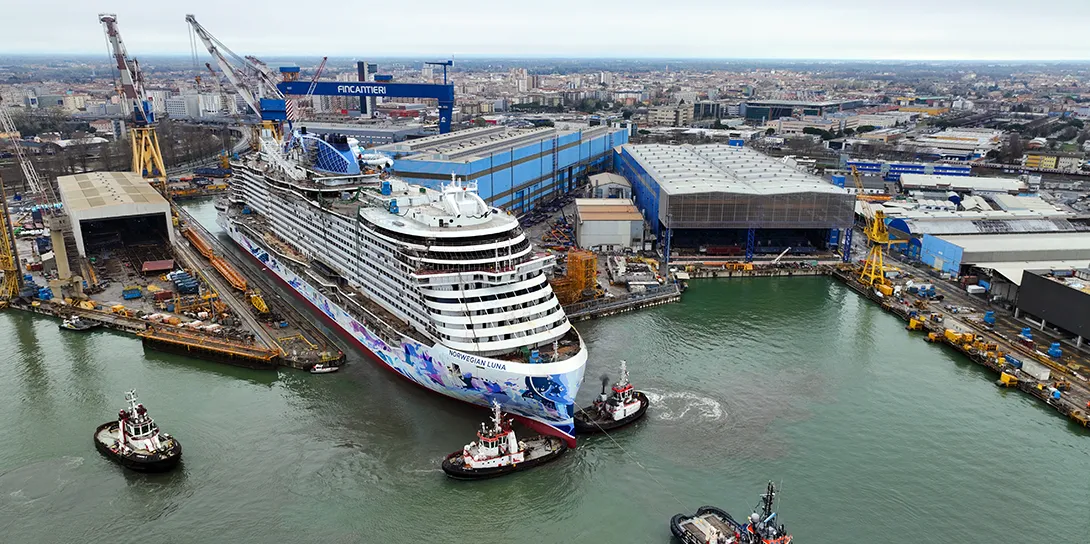
New for 2026: Norwegian Luna
Norwegian Cruise Line knows a good thing when it sees one, and the approach to the cruise brand’s newest ship, Norwegian Luna, was to keep the ship very much in-line with the cruise line’s three most recent sister ships, Norwegian Prima, Norwegian Viva, and Norwegian Aqua.Like its three Prima and Prima Plus sub-class sisters, Norwegian Luna has a slightly smaller footprint than the largest ships in the Norwegian Cruise Line fleet. With many of the brand’s newest innovations onboard, Norwegian Luna has no shortage of bells and whistles.Here is how Norwegian Luna has embraced some of the biggest trends right now in the cruise industry.A Smaller SizeNorwegian Luna isn't exactly what you'd call a small ship, but it's also not the largest in the Norwegian Cruise Line fleet. For decades, cruise lines vied for the title of “world's largest” cruise ship. Every time a line claimed to have the biggest cruise vessel, another brand would strive to outdo it, and ships continued to upsize. (The world's largest vessels can hold nearly 9,000 people at full capacity.)But, when Norwegian rolled out the Prima Class in 2022, it went smaller, rather than larger. Norwegian Luna carries 3,571 guests and is 156,300 gross registered tons, making it about 21% smaller in terms of passenger count than Norwegian Encore, which is NCL's largest ship, and about 36% smaller than Royal Caribbean's Icon of the Seas and Star of the Seas, which are currently the world's largest ships.The smaller size caters to passengers who prefer to sail with fewer people but with big ship amenities – in the case of Norwegian Cruise Line including adults-only areas, top-deck fun attractions, and even Starbucks outlets. Smaller ships can also get into some ports that the world’s largest ships can’t.Norwegian Cruise Line’s move toward smaller vessels is part of an industry trend of cruise lines leaning into smaller newbuilds. With two more Prima Class ships on the way, Norwegian Cruise Line joins Disney Cruise Line and Royal Caribbean, for instance, in having orders on the books for vessels smaller than the largest in their fleets.Entertainment highlightedThe main differentiator between Norwegian Luna and other Prima Class vessels is in entertainment. The ship debuted with three new main-theater entertainment options. One is a riveting tribute to Elton John, featuring pianos, top tier singing, dancing, and some mind-blowing costumes. There’s also a tribute to The Eagles, featuring many of the band’s hreatest hits sung by a group of four singers backed by live music.A show called "HIKO: Innovation Meets Wonder," incorporates a laser show, aerial acrobatics, digital projections and a performance set entirely on trampolines.The productions tie into the trend of cruise lines competing to have the flashiest, most technologically advanced and most captivating shows afloat, complete with elaborate sets and costumes and Broadway-worthy casts.A smaller, more exclusive, for-a-fee cabaret-style show on Norwegian Luna is held in one of the ship’s lounges – and speaks to a new wave of speakeasies and elevated entertainment options held in smaller, more intimate venues across the ships of several cruise lines.Jaw-Dropping Top-Deck FunAnother current trend is cruise lines courting multigenerational families with kids more than ever. That means adding exciting family friendly attractions, and Norwegian has put itself firmly in that realm with its newest additions.Norwegian Luna carries over several innovations from its sister ships. On the ship’s top outdoor decks, passengers can play on waterslides, thrilling dry slides, and the Aqua Slidecoaster, which weaves together waterslide and rollercoaster elements.Sustainability EffortsThe Cruise Lines International Association (CLIA) requires its members to abide by strict environmental practices. Cruise lines, including Norwegian Cruise Line, have, for instance, taken steps to reduce waste, avoid single-use plastics, implement recycling and water purification systems onboard, reduce energy usage, and plug into shoreside power when available. CLIA’s member cruise lines are pursuing net-zero emissions by 2050.Practices on Norwegian Luna also include keycard-controlled cabin lights (that turn off automatically when the card is removed) and cutting down on food waste including, creatively using fruit by-products and peels as ingredients for a sustainable cocktail menu at the Metropolitan Bar.© 2026 Cruise Lines International Association (CLIA). All rights reserved.This content may be shared or republished with clear attribution to Cruise Lines International Association (CLIA). Content must remain intact and may not be altered, edited, or excerpted in any way that changes its meaning or context. For additional permissions, media inquiries, or additional information, please [email protected]. 02 June, 2026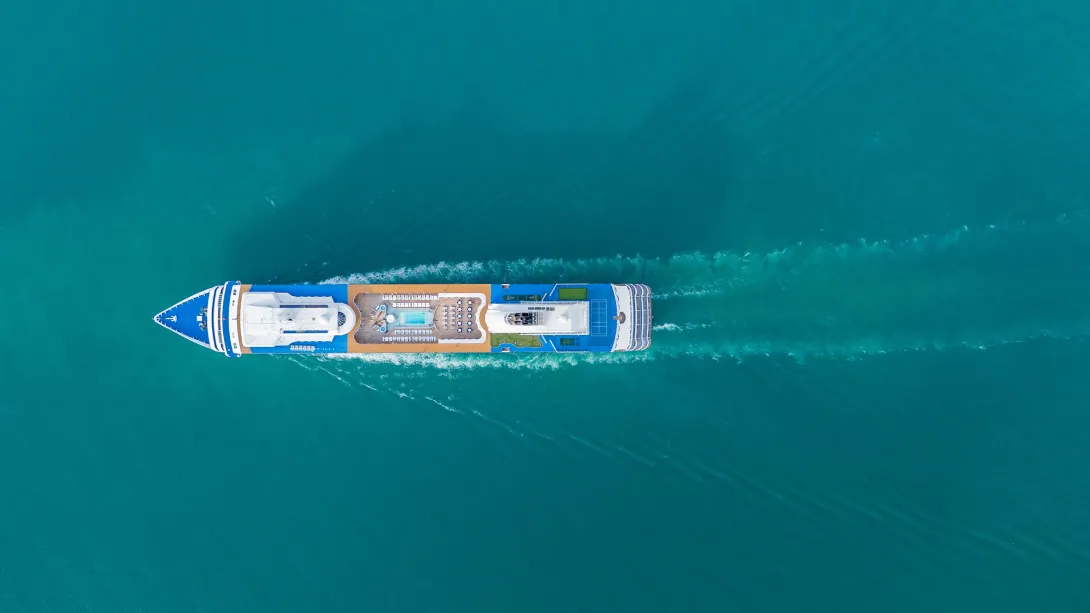
The Next Wave of Cruise Innovation
From smart staterooms to record-breaking rides, today’s ships are redefining what it means to travel at sea.Cruises have undergone a sea change, literally. In addition to providing a fun and easy way for guests to get to exciting destinations around the world, members of the Cruise Lines International Association (CLIA) are embracing cutting edge technology powered by innovation to create ships that are destinations themselves.Thanks to this wave of innovation, travelers are sailing with more freedom, ease, and excitement than ever before.Frictionless travelCruise lines are taking convenience to a whole new level, as technology transforms the passenger experience. Here are some examples of the exciting advances.Biometrics: Boarding is now faster than ever. Carnival, Royal Caribbean, MSC, Norwegian, and Disney Cruise Line are among CLIA members collaborating with U.S. Customs and Border Protection (CBP) to utilize facial-recognition technology. This new-era facial recognition technology reduces clearance times by up to 30%, enabling guests to bypass long lines and board their ship and begin their vacations with just their smile – and disembark their ship at the end of their cruise just as easily.Wearables: Wearable RFID (radio-frequency identification) chip medallions are replacing traditional keycards on cruise lines such as Disney Cruise Line and Princess Cruises – which introduced and are continuing to refine these wearables. They allow touch-free boarding, keyless stateroom access, onboard payments, and even give directions through location tracking. Guests receive personalized notifications and activity suggestions tailored to their interests on their linked smartphones.Smart cabins: By using cutting edge technology, cruise lines are creating cabins that are more sophisticated than ever. For instance, on Celebrity’s Edge-series ships, staterooms can be controlled via the shipboard app– so guests can, for instance, close the window shades and turn on the air-conditioning before they return to their cabin after a day exploring. MSC’s innovative AI assistant, ZOE. allows guests to control their stateroom’s lighting and temperature via voice command or the ship's app.Next generation entertainment at seaCruise ship innovation isn’t just functional; it’s also fun. CLIA’s member cruise lines understand that their guests value high-quality entertainment onboard. Here are some ways they are going the extra mile to deliver innovative programming at sea.World-class stages: Cruise theaters are no longer just for live performances; they are now hubs of technological innovation. Royal Caribbean’s newest Icon-class ships, for instance, feature shows such as the full-scale Broadway musical, “Back to the Future,” which wows with a flying DeLorean car finale. Celebrity’s Edge class ships sail with technologically enhanced theaters with giant synchronized screens, state-of-the-art video mapping, and a stage that lifts to nearly seven feet in the air for stunning productions. These and other new ship theaters push the limits of stagecraft, immersing audiences in storytelling moments like never before.Thrill rides at sea: Large-ship cruise lines are keen on capturing the wonder of kids of all ages, including through exciting thrill attractions. Norwegian Cruise Line’s newest thrill innovation is the world’s-first Aqua slidecoaster onboard the Norwegian Aqua – a hybrid rollercoaster waterslide propelled by a custom-built magnetic lift arm, reaching speeds up to 31 MPH. Carnival brings action and adrenaline to several of its ships with SkyRide – a suspended, two-lane track where passengers pedal along the deck and even out over the sea. MSC Seascape boasts a new Robotron robotic arm thrill ride.VR and AR:Virtual reality is enhancing onboard experiences such as fun options involving headsets in onboard gaming rooms. Cruise lines are also using AR (augmented reality) to add a new dimension to shipboard activities – such as the new immersive digital art experience on Oceania Allura, where guests point their smartphones at a QR code next to artworks to see films about the artists’ perspectives and inspirations.Looking aheadWith immersive theaters, thrill rides, VR/AR, and staterooms that think for themselves, a new era of ships proves the future of cruising holds endless possibilities as cruise lines adopt new and emerging technologies to enhance the vacation experience.© 2026 Cruise Lines International Association (CLIA). All rights reserved.This content may be shared or republished with clear attribution to Cruise Lines International Association (CLIA). Content must remain intact and may not be altered, edited, or excerpted in any way that changes its meaning or context. For additional permissions, media inquiries, or additional information, please email [email protected] 18 May, 2026
Sustainable Shore Excursions Are a Win for Cruise Passengers and the Communities They Visit
Sustainable travel has grown from a trend into a way of life. Cruise travelers are among those invested in responsible, sustainable, eco-friendly travel, and shore excursions are a direct way guests can have a positive impact on local communities.“We are seeing a growing trend of travelers desiring sustainable shore excursions and authentic experiences as people are looking to travel with purpose and leave a positive impact on the destinations they visit,” says Linden Coppell, MSC Cruises’ Vice President of Sustainability & ESG.Cruise Lines International Association (CLIA) and several of its member lines partner with global organizations, such as the United Nations World Travel Organization, World Travel & Tourism Council, and the Global Sustainable Tourism Council (GSTC), to develop and promote sustainable tourism initiatives.Member cruise lines are doing their part to create shore excursions that align with the GSTC goals of effective sustainability planning, maximizing social and economic benefits for local communities, enhancing cultural heritage, and reducing negative impacts on the environment.Sustainable shore excursionsA growing number of cruise guests are seeking shore excursions that go deep.“Our guests are increasingly drawn to experiences that foster authentic connections with local communities and craftspeople, including First Nations artisans, oyster cultivators, distillers, and vintners,” says Jessica Ashe, Senior Director of Shore Excursions and Future Cruises forHolland America Line. The line’s new sustainable tour offerings, such as a visit to a banana farm in St. Lucia and a walk with an Aboriginal guide on Kangaroo Island, Australia, revolve around community interactions.Norwegian Cruise Line Holdings (NCLH) brands have tours focused on local conservation efforts, such as Regent Seven Seas Cruises’ Eco-Connect tours and Norwegian Cruise Line’s Go Green tours. Examples include exploring a sloth habitat in Puntarenas, Costa Rica, or planting a tree at the Sierra Espuña regional park in Cartagena, Spain, while learning about reforestation efforts.MSC Cruises’ Protectours shore excursions aim to have lower environmental impact, whether employing zero-emission electric tour buses, focusing on human-powered activities like cycling or kayaking, or involving guests in volunteer efforts, such as beach cleanups or planting trees.Certifications and partnershipsCLIA and its member cruise lines partner with destinations, communities, and with leading organizations in delivering guests sustainable experiences ashore.Royal Caribbean, for instance, has pledged that 60% of its tours will be certified to GSTC’s standards by 2026; as of 2024, 36% of its 3,500+ excursions met the organization’s criteria. Examples: A wild-caught salmon cooking class with a third-generation Alaskan fisherman and a tour of Aruba’s cultural and geological landmarks combined with a visit to a local aloe factory.In Alaska, where sister brands Holland America Line and Princess Cruises own their own lodges and transportation and rail divisions, Holland America Princess is certified by Adventure Green Alaska for its environmental, economic, and cultural sustainability practices, such as using electric and hybrid vehicles and providing guests with recyclable aluminum water bottles. Both lines work with many local companies that are also AGA-certified for shore excursion options, such as the Alaska Wildlife Conservation Center, Kenai Fjords Tours, and Wings Airways.In 2024, French line Ponant became the first cruise line to achieve Green Globe certification for its contributions to sustainable tourism, which include involving local communities in developing shore activities. For example, Balinese guides introduce guests to the island’s unique Hindu-Indonesian traditions and provide opportunity for guests to help with daily activities.Economic benefits for local communitiesOne of CLIA’s guiding principles for responsible tourism is to “contribute to the economic well-being of host communities.” Shore excursions support this effort. In addition to working with local communities on planned, managed tourism, CLIA member lines support local businesses through activities ashore.For example, when Carnival Cruise Line created its new beach destination, Celebration Key, on Grand Bahama Island, the company prioritized economic opportunities for Bahamians. In addition to enjoying water activities, cruisers can purchase art from local craftspeople and sample authentic Bahamian flavors from food trucks, that are operated by local vendors and feature locally sourced ingredients.In line with their personal sustainability goals, cruise passengers can have a meaningful positive impact on the treasured places they visit.© 2026 Cruise Lines International Association (CLIA). All rights reserved.This content may be shared or republished with clear attribution to Cruise Lines International Association (CLIA). Content must remain intact and may not be altered, edited, or excerpted in any way that changes its meaning or context. For additional permissions, media inquiries, or additional information, please email [email protected] 18 May, 2026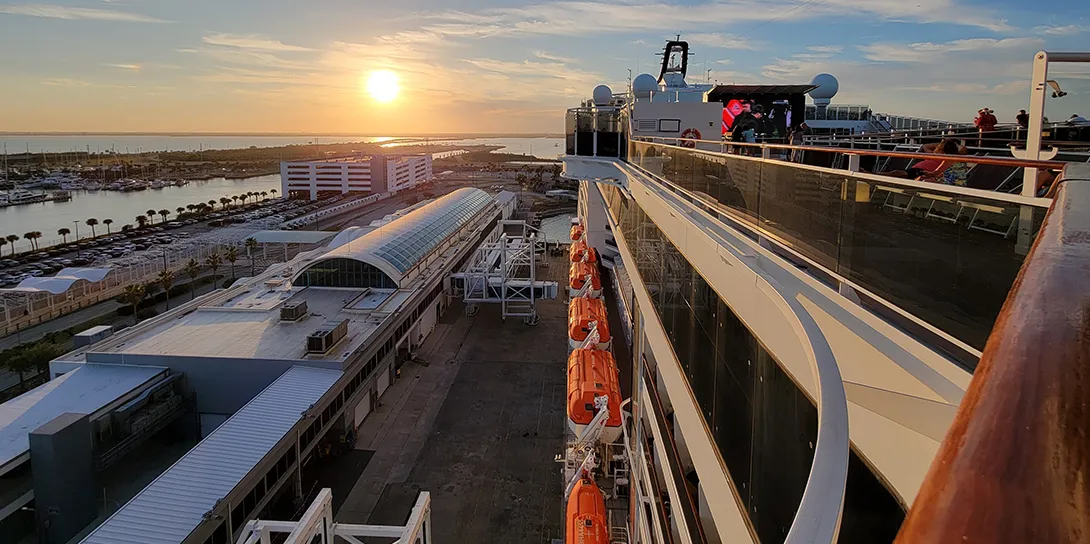
Port Canaveral Leads in LNG Cruise Ships, Supports Florida Jobs
With its year-round operations, Port Canaveral is the preeminent cruise port in North America for cruise ships powered by cleaner-burning liquified natural gas (LNG) and the second busiest cruise port in the world. Some 9 million cruise guests are expected to sail from Port Canaveral next year, and the port anticipates exceeding 10 million passengers by fiscal year 2027.The popular port’s ability to attract the world’s newest and largest cruise ships was built on prescient investments in LNG fueling readiness. LNG is the cleanest-burning fossil fuel readily available. As the cruise industry pursues net-zero cruising by 2050, LNG-powered ships will be able to easily switch to future sustainable fuels, such as bio or synthetic LNG.For cruise guests, Port Canaveral is an easily accessible destination. About 85% of passengers drive to the port for their cruise vacations. These drive-in market guests, and guests who fly in too, visit local beaches, restaurants, and attractions and stay at local hotels.In addition to cruise and cargo operations, Port Canaveral has recreation options, including its own Jetty Park beach – a popular spot to watch space launches or passing cruise ships. The port has commercial fishing and local seafood outlets, aerospace and military operations, restaurants and retail shops, public boat ramps, marinas, and more.Among the 20 homeported cruise ships in Port Canaveral are some of the newest and largest LNG-powered ships from Carnival Cruise Line, Royal Caribbean, and Disney Cruise Line. Royal Caribbean launched the world’s largest cruise ship, the 250,000-ton Star of the Seas, from Port Canaveral in August 2025.LNG LeaderPort Canaveral was the first North America homeport to accommodate cruise ships powered by LNG. Capt. John W. Murray, CEO and Port Director of Port Canaveral, who joined the port in 2016 from the commercial ocean carrier side of the maritime industry, was studying cruise industry trends and observed that several new cruise ships under construction would be powered by LNG, a first for the industry. Murray saw LNG as a way for the port to distinguish itself and attract the cruise industry’s largest and most innovative ships.“I started asking questions,” Murray says. “I knew if we figured out the ‘how’ in terms of LNG fueling of passenger vessels, those new ships might come to Port Canaveral. It took more than five years and considerable effort to develop bunkering best practices and protocols and specialized safety and firefighting capabilities to get to a point where it worked.”The LNG bunkering practice developed by Port Canaveral has become the prototype for ports around the world. The first LNG-powered cruise ship arrived at the port in 2021, Carnival Cruise Line’s Mardi Gras – which debuted as the first ship in North America to run on LNG. The ship operates from Cruise Terminal 3, built to accommodate Carnival Excel-class ships.Five LNG-powered ships are now homeported in Port Canaveral – Disney Wish and Disney Treasure, Mardi Gras, and Royal Caribbean’s Utopia of the Seas and Star of the Seas. Coming in 2027 are MSC World Atlantic and Carnival’s Festivale, bringing the number to seven – as Port Canaveral continues as an LNG leader.In addition to these lines, homeporting ships in Port Canaveral are Norwegian Cruise Line, Princess Cruises, and Celebrity Cruises. Ships also visit as a port of call or to provision. Passengers book shore excursions such as a tour to see the NASA Kennedy Space Center.Port Canaveral Benefits FloridaThe thriving port is a significant economic driver for Central Florida and the entire state, accounting for $6.1 billion in statewide economic impact and nearly 43,000 jobs. The port and its business segments deliver some $2.1 billion in wages and $189.5 million in state and local taxes.“We’re providing jobs in the State of Florida and Florida-based businesses benefit from port operations,” says Captain Murray. “When you have a ship with thousands of people onboard, they are getting all of their food supplies, laundry and everything else for a whole week delivered, and all of that is provided from local vendors and suppliers.”As cruise grows, so do local businesses. “The cruise industry is a vital and fast-growing part of Central Florida’s economy, and we’ve been growing every step of the way,” says Janne Meinertz, president of Cape Canaveral, Fla.-based American Cruise-Aid Logistics.Eric Garvey, CMO of a local hospitality group, says, “Cruising from Port Canaveral is not just holding steady—it’s thriving. Transportation services, hospitality partners, and local businesses are all feeling the positive impact of this growth.”© 2026 Cruise Lines International Association (CLIA). All rights reserved.This content may be shared or republished with clear attribution to Cruise Lines International Association (CLIA). Content must remain intact and may not be altered, edited, or excerpted in any way that changes its meaning or context. For additional permissions, media inquiries, or additional information, please email [email protected] 18 May, 2026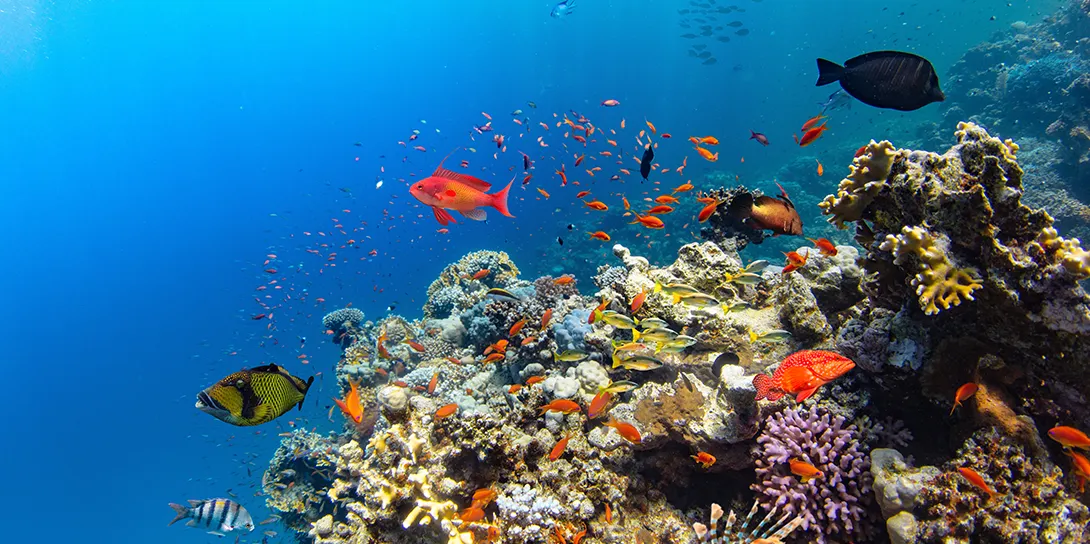
Cruise Lines Focus on Sustaining the Future of Coral Reefs
Cruise Lines International Association (CLIA) members are working on innovative and ambitious ways to sustain and grow coral reefs, key marine habitats that are among the most diverse ecosystems on the planet, and extremely vulnerable to warming ocean temperatures. CLIA places environmental sustainability among its top priorities, including the health of the oceans.CLIA member cruise lines are taking a leading role as an energizing force for change, partnering with marine science organizations and universities in coral reef restoration initiatives. Member lines are also focused on public engagement and helping guests understand the need to preserve and sustain coral reefs.These are among the ambitious cruise line-sponsored projects underway.MSC Cruises is involved in the preservation and growth of coral species through the MSC Foundation’s “Super Coral Reefs Programme,” which is playing an important role in revitalizing coral populations, including the critically endangered elkhorn and staghorn corals. Among projects, MSC is supporting the growth of coral trees. Once they reach a certain level of growth, the coral trees are transplanted into MSC’s offshore nursery of Ocean Cay, MSC’s private Bahamas island, and eventually to coral reefs. Under development is a scalable model that MSC hopes will aid coral reef restoration worldwide. Partners include Bahamian and international scientists, universities, and conservation organizations, with research shared in scientific publications. In 2025, MSC opened a Marine Conservation Centre on Ocean Cay, its private island in the Bahamas. The facility includes 22 coral tanks used for growth and scientific study by marine scientists and students. Cruise guests have the opportunity to visit the center to gain a greater understanding of the importance of healthy coral.Royal Caribbean Group has joined with the Inter Miami CF soccer team and the University of Miami Rosenstiel School of Marine, Atmospheric, and Earth Science to support the school’s citizen science program, Rescue a Reef, in South Florida. The triad focuses on bringing back the growth of marine invertebrates in more than 1,000 coral colonies off Miami. Royal Caribbean Group also underwrites coral restoration work with the Marine Resilience & Sustainability Center (MARES), dedicated to restoring the biodiversity of the Caribbean Sea. The center’s work has included the rehabilitation and repair of nearly 50 acres of delicate marine ecosystems. In addition, Royal Caribbean has placed “reef balls,” also known as “bay balls” – which mimic natural reefs as habitats for marine life – near Perfect Day at CocoCay, the cruise line’s private island in the Bahamas. These balls, weighing some 1,750 pounds, help create a home for coral and sustain its growth.Disney Cruise Line plays a key role in coral reef restoration through the Disney Conservation Fund (DCF), which supports the Coral Reef Foundation, the world’s largest non-profit focused on restoring coral reefs. Disney’s work has blossomed from its initial efforts in planting a few thousand corals in Florida’s Coral Reef to a program that now numbers in the tens of thousands of corals. The cruise company has also helped create a Pillar Coral Recovery Project focused on growing and preserving Pillar corals, a somewhat rare species that the U.S. National Oceanic and Atmospheric Administration (NOAA) Fisheries describes as cigar-like clusters growing upward. In addition, DCF has also supported work in coral genetics, and education efforts including “Coral Reefs and You,” a student education program, which educates on the importance of coral reefs, including on local economies, and stresses the need for conservation efforts.Windstar Cruises is involved in coral reef restoration though a partnership with Coral Gardeners, an organization based in French Polynesia’s Moorea, part of the Windward Islands, about 11 miles northwest of Tahiti. The organization’s goal is to restore reefs through “innovative coral farming and transplantation.” The program began on Windstar’s 312-passenger Star Breeze in 2022, with Windstar adopting 1,000 corals and encouraging guests cruising Tahiti to do the same for a $35 per person donation. Since then, Windstar has encouraged guests on any itinerary to adopt a coral, which they can gift to friends or family. More than 3,500 corals have been adopted. A goal of the line is a dedicated coral nursery. Windstar also takes interested guests in French Polynesia on an excursion to see what Coral Gardeners does. They are introduced to staff who educate them about growing coral and steps taken towards restoring reefs.© 2026 Cruise Lines International Association (CLIA). All rights reserved.This content may be shared or republished with clear attribution to Cruise Lines International Association (CLIA). Content must remain intact and may not be altered, edited, or excerpted in any way that changes its meaning or context. For additional permissions, media inquiries, or additional information, please [email protected]. 18 May, 2026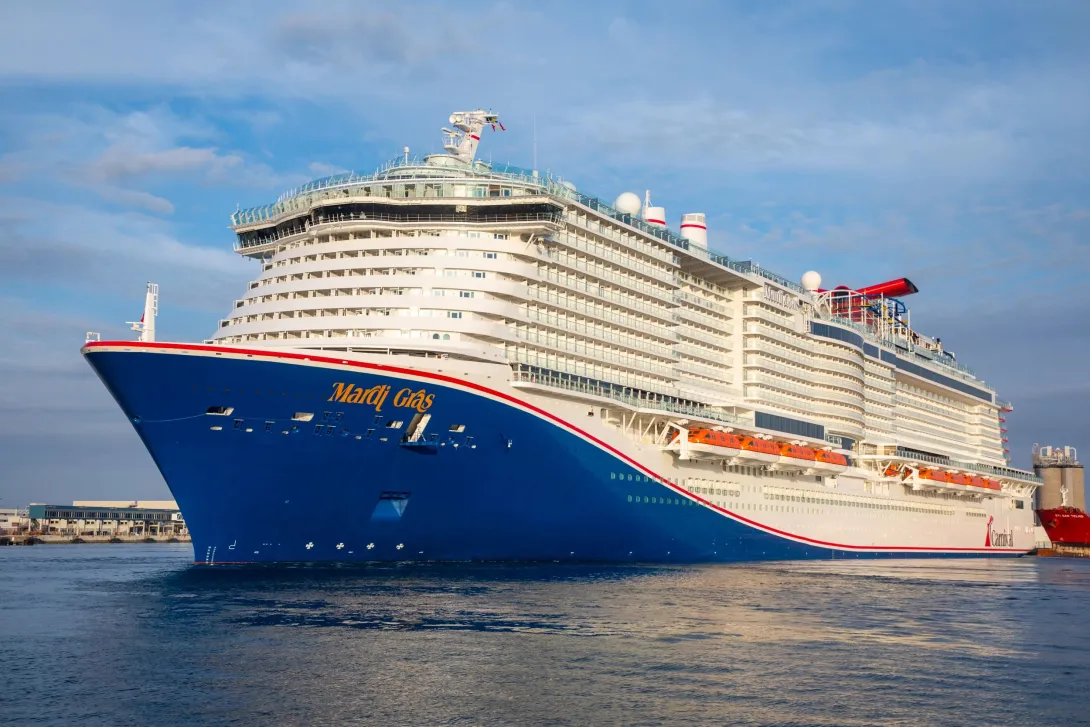
Fueling The Future of Cruise
Cruise is a small segment of the global maritime industry, yet mighty as an early adopter and innovator for the entire sector in decarbonization. Even with the unknown of which alternative, non-fossil fuels will propel ships in 2050, cruise lines are well on their path to a sustainable future.In pursuing net-zero emissions by 2050, cruise lines are investing tens of billions of dollars in new ships, sustainable and adaptable propulsion, and the testing of new fuels.“Our commitment has moved to the place where investments are aggressive, and the technology is being developed at a sufficient and reasonable pace,” says Cruise Lines International Association (CLIA) President and CEO Bud Darr. “There are challenges. Fuel supply remains by far the controlling factor as to how quickly we can decarbonize. We need competitively priced safe and affordable fuels that do not exist today at scale.”Lower-emissions pathwaysCruise lines are not waiting for off-the-shelf solutions to decarbonization. They are building ships with fuel-flexible engines as a bridge to the increased use of zero- and near zero-emissions fuels in the future. Little or no engine modifications will be needed as new fuels emerge.Carnival Corporation pioneered the use of Liquified Natural Gas (LNG) for dual-fuel cruise ships in 2018. LNG-powered ships are now in the fleets of several CLIA members including Carnival Cruise Line, Disney Cruise Line, MSC Cruises, Norwegian Cruise Line, Princess Cruises and Royal Caribbean International. LNG is the cleanest burning fossil fuel, reducing carbon emissions by up to 20 percent. LNG can be replaced by sustainable bio- or synthetic versions when supply is available at scale.Several lines are preparing for the use of green methanol in the future such as Disney Cruise Line, MSC Cruise Lines, Norwegian Cruise Line and TUI Cruises.Through 2039, 41 multi-fuel ships are forecast to launch, including five capable of using methanol and 26 capable of using LNG, according to CLIA.Testing new fuelsMajor cruise companies are actively testing new fuels in partnership with engine companies and fuel suppliers, the results already showing existing ship engines are adaptable to the fuels, with little modification.While biofuels are expensive, they can be blended in with traditional fuels, and several ships today are supplementing their power supply with biofuels.Projects underway also include using hybrid batteries and hydrogen for supplemental power. Solar and wind may play a supplemental role in the future.Trials are taking place too with carbon capture, where a ship can reduce its carbon footprint by using technology to capture carbon dioxide in liquid form so it can be offloaded in port, rather than releasing it into the atmosphere. “It’s seen as a transitional tool,” Darr says.Supply challengesDarr predicts a broader emergence of alternative fuels in the next five years, but not likely at a scale needed by the shipping industry – which represents about 4% of the world’s fuel consumption (with cruise only 0.04% of the global totall).A lack of a mid-stream distribution infrastructure is a challenge, and larger users of fuel – such as the transportation sector (including roads), manufacturing, and agriculture – are all competing with the maritime sector for sustainable fuels.Cruise lines may be able to meet their decarbonization goals with solutions such as purchasing bio-fuel credits – where their ton of fuel would be used by someone else on the common grid, Darr says. “It’s kind of like a swap, and the environmental benefit may be better as you may not have to transport the fuel,” he explains.Despite challenges, Darr is optimistic that the cruise industry will meet its target of net-zero emissions by 2050.“It’s going to take multiple pathways, and there will be multiple correct answers on how to solve this puzzle,” Darr says. “It really starts with where we are now, which is commitment, investment, and courage, with CLIA members moving forward strongly even in an uncertain future fuel environment.”© 2026 Cruise Lines International Association (CLIA). All rights reserved.This content may be shared or republished with clear attribution to Cruise Lines International Association (CLIA). Content must remain intact and may not be altered, edited, or excerpted in any way that changes its meaning or context. For additional permissions, media inquiries, or additional information, please email [email protected]. 18 May, 2026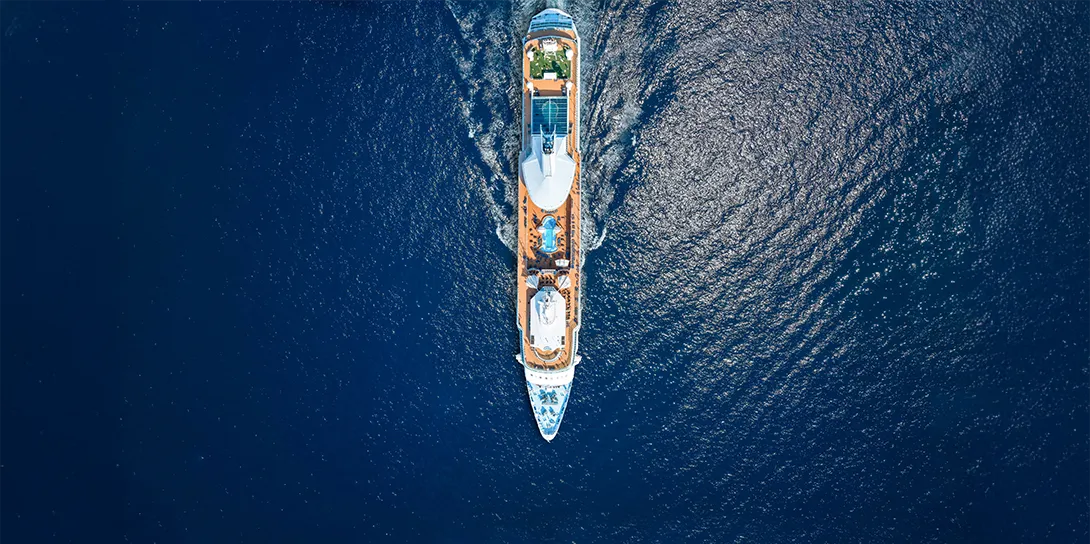
Protecting Our Oceans: Clean Water Cruise Ship Practices
Member cruise lines of Cruise Lines International Association (CLIA) are leading the way when it comes to reducing and eliminating waste at sea. They are meeting or exceeding strict compliance requirements under international conventions, as well as regional and national regulations. CLIA is also actively contributing to the review and revision of applicable international conventions regulating the management and treatment of numerous waste streams.Advanced wastewater technologiesAs of October 2025, 82.4% of CLIA member’s global cruise fleet – or 234 ships – are fitted with Advanced Wastewater Treatment Systems (AWTS). These systems offer tertiary levels of treatment to convert blackwater (such as water and waste from toilets and medical areas) into treated effluent that meets or exceeds even the most stringent discharge standards. CLIA members do not discharge untreated sewage anywhere at sea globally during normal operations.With each passing year, advanced waste treatment technologies become even more advanced and capable. More than one-third of the CLIA member global cruise fleet now meets or exceeds the more stringent wastewater standards of the Baltic Sea Special Area, which are some of the strictest regulations in the world.Advanced wastewater treatment systems and other waste management technologies and practices continue to drive innovation in the cruise industry, resulting in ships that are greener than ever before – including being able to treat and reuse their own by-products for power, to reduce waste, and to protect our oceans at the same time.Onboard practices include the management of bilge water, ballast water, and graywater. Though not regulated under international conventions, CLIA member cruise lines agree, as a condition of membership, to only discharge these when the ship is underway and at a distance not less than four nautical miles from the nearest land.Water conservationCLIA member ships are also focused on water conservation. Measures onboard cruise ships include minimizing water use and reclaiming and reusing of water for non-potable (nondrinking) purposes, using water saving equipment and devices, implementing water recovery systems and processes, and training and educating crew to conserve water – for instance turning off faucets and closing valves when not in use.Cruise ships are designed to make full use of all water that is taken in. Things that don’t require potable water onboard, like toilets and hoses for washing the decks, use repurposed condensation from the ship’s air conditioning and chiller units. Low-flow showerheads and vacuum toilets help cut down on demand for water, and, subsequently, wastewater.Most ships in the CLIA member global fleet – 98.2 % of ships – can produce the majority of their freshwater needs onboard, reducing any burden on the ports of call they visit to provide fresh drinking water. Nearly every ship, for instance, can make its own freshwater via onboard desalinators. These systems draw in sea water and convert it into drinking water via reverse osmosis, aeration, or steam evaporation.Through onboard technologies and practices, cruise ships efficiently and effectively manage and treat water from many sources – as cruise continues to lead the way in travel and tourism sustainability around the world. To learn more about CLIA’s commitment to waste management technologies and practices and global environmental stewardship, visit: Environmental Protection and Stewardship | Cruise Lines International Association.© 2026 Cruise Lines International Association (CLIA). All rights reserved.This content may be shared or republished with clear attribution to Cruise Lines International Association (CLIA). Content must remain intact and may not be altered, edited, or excerpted in any way that changes its meaning or context. For additional permissions, media inquiries, or additional information, please email [email protected] 18 May, 2026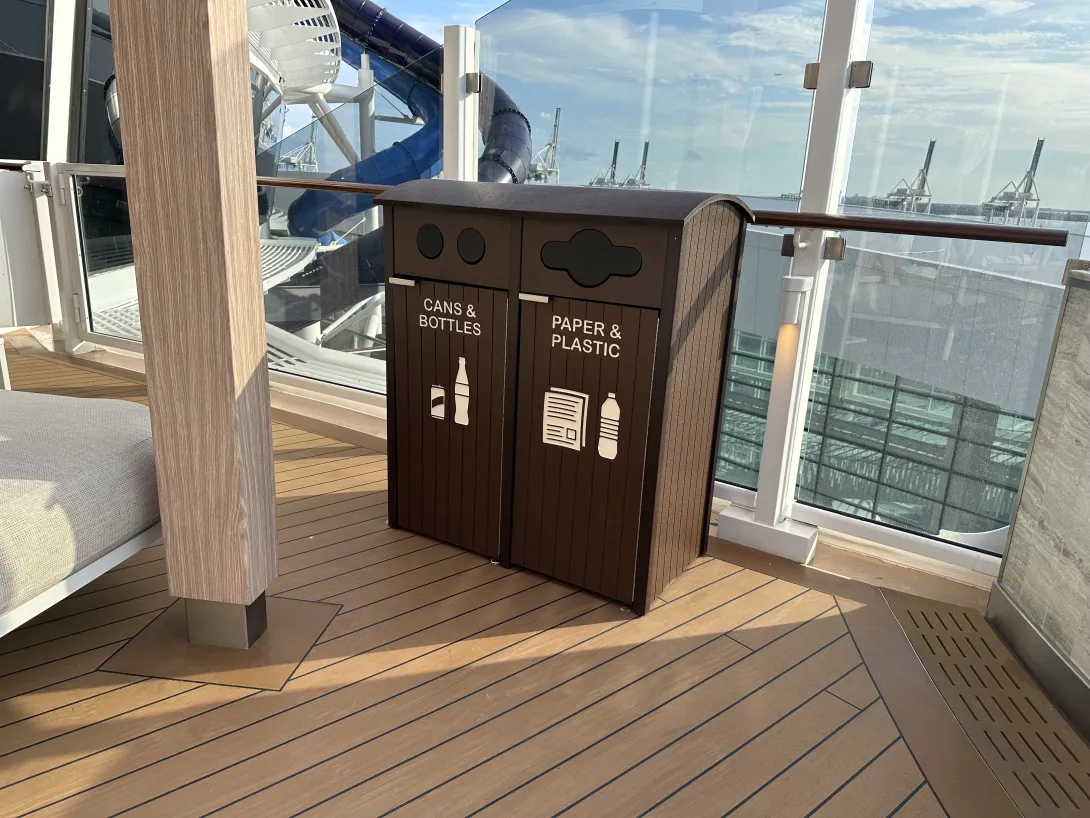
Reduce, Recycle, Eliminate: How Cruise Lines are Reducing Plastic Waste
Cruise lines are continually finding new and exciting ways to innovate and improve the guest experience, from cutting-edge entertainment to world-class dining options. Exciting innovations are also taking place below deck. When it comes to plastic recycling, the industry is leading the way, with cruise lines focused on new ways to reduce, recycle, or eliminate plastic waste.Reducing PlasticThe first line of defense is reducing plastic use entirely. Many Cruise Lines International Association (CLIA) members, for instance, have switched to individual aluminum or paper bottled water containers onboard, banning plastic bottles for sale. Many cruise lines also now offer filtered water filling stations that allow guests to use personal reusable bottles onboard, and some lines provide take-home reusable bottles as a guest amenity.In terms of single-use plastics cruise lines are reducing everything from plastic straws to plastic used for shipping food and other goods to the ships. The impact of this is huge: Carnival Corporation, with its eight brands has eliminated more than 500 million individual plastic items.Royal Caribbean aimed to achieve an 80% reduction in single-use plastics by the end of 2025. This includes replacing drink stirrers and toothpicks with sustainable versions made from wood or bamboo.CLIA member cruise lines’ commitment to reducing plastic doesn’t just end within the hull of the ship: Cruise lines such as Holland America Line, MSC and Princess Cruises routinely participate in beach and shoreside cleanups in the ports of call they visit.On its private Bahamas island, Perfect Day at CocoCay, Royal Caribbean committed to reducing plastic waste, along with all other waste – efforts which have already seen a 50% reduction in waste barge shipments to nearby Nassau.Recycling Plastic and Other MaterialsCruise lines have also ramped up their efforts to recycle the plastics that do make it onboard – with innovative results.Holland America Line debuted an exciting new item in its onboard gift shops: Coffee coasters made with scraps of old carpeting taken off its ships during drydock. The new carpets that were laid down were, too, made using recycled products, including recycled plastic debris.Disney Cruise Line found a use for recycled plastic in its musical production of “The Little Mermaid,” on Disney Wish, with costumes made with recycled plastic, melted into threads, and woven into material.Norwegian Cruise Line recycles its old mooring lines thanks to a partnership with Vancouver, Canada-based TYMAC, which transforms the lines into items like soap dishes and planters.Eliminate – and PowerBelow-the-waterline, advanced climate technology is enabling cruise lines to reduce plastic and other waste, while also generating auxiliary power.The latest Princess Cruises ships, for instance, are outfitted with Micro Auto Gasification Systems (MAGS) that ingest and burn waste to create a syngas that can be used for low-emission energy.Microwave-Assisted Pyrolysis, or MAP, systems – as implemented on new ships by Royal Caribbean – convert waste into clean energy by using microwave technology.With policies and cutting-edge technology, CLIA cruise lines are leading the way, recycling, reducing, and eliminating plastic waste.© 2026 Cruise Lines International Association (CLIA). All rights reserved.This content may be shared or republished with clear attribution to Cruise Lines International Association (CLIA). Content must remain intact and may not be altered, edited, or excerpted in any way that changes its meaning or context. For additional permissions, media inquiries, or additional information, please email [email protected]. 18 May, 2026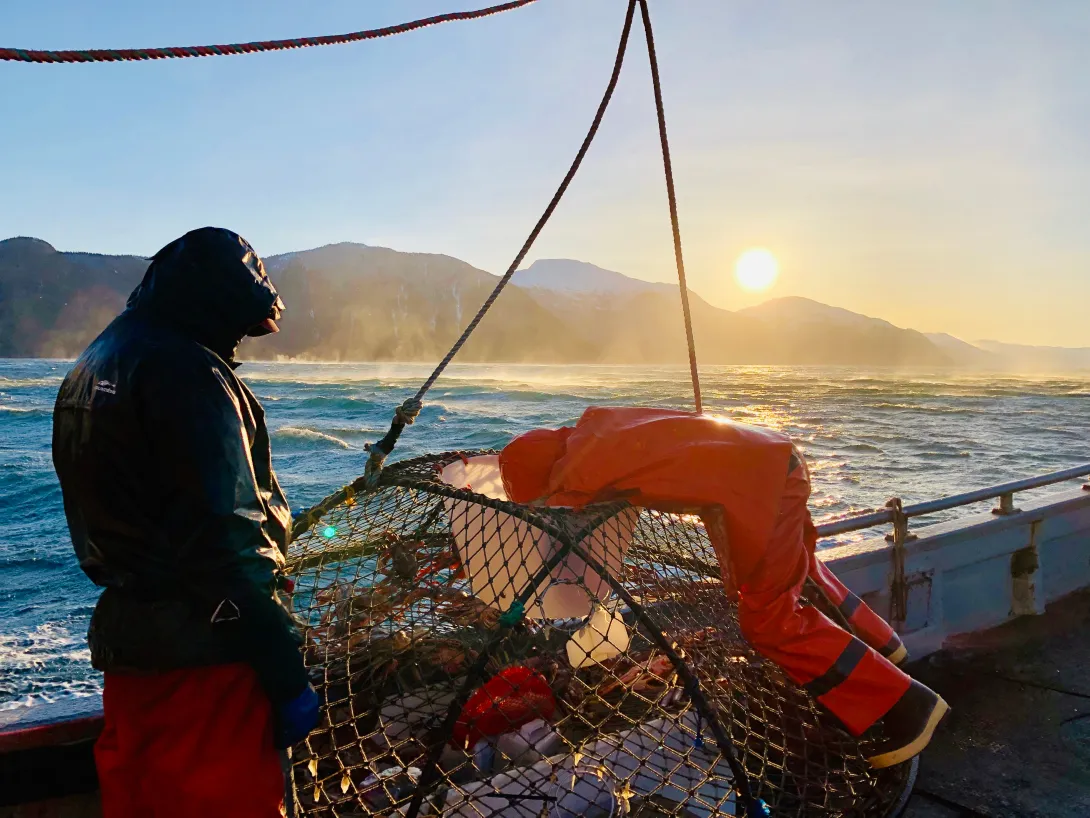
Fresh From the Source: Local Suppliers Feed Cruisers
Before dawn breaks over Kodiak, Alaska, the rush of the morning has already begun as crews unload the morning's catch: wild salmon, halibut, and Pacific cod still stuck with icy seawater. Within hours, the day's bounty will be cleaned, packed, and transported onto the plates of cruise ship guests.In Alaska, Seattle, and beyond, local sourcing connects communities directly to the food served on visiting cruise ships. Collaborations with Cruise Lines International Association (CLIA) member cruise liens ensure that local businesses benefit directly from cruise tourism - while guests reap the benefit of enjoying food that reflects the places they visit.For small-scale suppliers such as fisheries, fruit and vegetable farms, pasts makers, and cheesemakers, partnering with cruise lines can sustain an entire season's livelihood.A foodie renaissance at seaCruise ship guests are increasingly interested in how onboard dining reflects the regions they visit. In response, cruise lines are expanding relationships with suppliers in the ports they visit to bring local flavors on board.In Puerto Rico, producers such as family owned Martex Farms provide cruise ships with fresh high-quality produce such as bananas and mangos.In Seattle, cruise liens work with local purveyors such as Sterino Fams in Puyallup, Wash., a provider of produce that allows chefs on Holland America Line ships to showcase the best local products. Cruise guests reap the benefits of fresh flavors. Charlie's Produce is another leading supplier of fresh fruits and vegetables to cruise ships bound for Alaska, a trusted Pacific Northwest supplier with long-standing relationships with local farms for fresh produce.Across Europe, small farms, cheesemakers, pasta makers, and fishmongers likewise work with CLIA members, providing seasonal products for cruise guests to enjoy. Conor SRL, based in Bologna, Italy connects farmers and cruise ships, distributing high-quality fruit and vegetables to ports across the Mediterranean and Northern Europe.In Northern Germany, AIDA cruises treats guests to strawberries from Karls Farm in Rovershagen throughout the summer. The initiative reflects the line's commitment to using locally grown products - in this case fresh strawberries - supporting the regional economy offering passengers a taste of Germany.For local farms, aligning harvests with the cruise season allows growers to plan production around guaranteed demand, and to keep their businesses going beyond peak tourism season.Direct from the sourceFor sailings in the Pacific Northwest and Alaska, small-scale fisheries work with cruise liens to seamlessly source local catches for daily menus.In Alaska and elsewhere, CLIA member lines such as Royal Caribbean, Norwegian Cruise Lines, and Holland America Line are increasingly partnering with seafood organizations to adhere to the highest sustainability standards in sourcing products. These include the Maritime Stewardship Council (MSC), a nonprofit that supports sustainable fishing practices globally. As part of their commitment to sustainable sourcing, Holland America Line is also partnering with the Alaska Seafood Marketing Institute (ASMI).Royal Caribbean's efforts in the Pacific Northwest and Alaska include partnerships with local suppliers such as the Seafood Producers Cooperative and Alaska Specialty Seafood, to source fresh seafood and other regional products.Beyond Alaska, Holland America Line, as an example, works with European companies such as Schmidt Zeevis in Rotterdam and Bjerrfisk in Frederikshavn, Netherlands, to supply fish caught each morning, ensuring guests on European cruises fresh tastes of the sea.MSC Cruises and Explora Journeys source most of their food locally in Europe and beyond, such as chocolate and gelato from Venchi, based in Italy's Piedmont region.Guests on the Norwegian Cruise Line ships in Texas and Louisiana get a taste of local dairy thanks to the line's collaboration with supplier Cafe Azul to procure award-winning milk from Volleman's Familu Farm, a fourth-generation, family operated farm in Gustine, Texas.From shore to shipSourcing locally isn't just a smart choice; it's how CLIA members enhance the onboard experience. Whether that's a server who can offer the precise origin of the day's catch or opportunity to indulge in a decadent cheese handmade just miles from the day's port, these local infusions deliver both quality and sense of place.Through smart sourcing cruise lines link to coastal communities, helping local food producers thrive.© 2026 Cruise Lines International Association (CLIA). All rights reserved.This content may be shared or republished with clear attribution to Cruise Lines International Association (CLIA). Content must remain intact and may not be altered, edited, or excerpted in any way that changes its meaning or context. For additional permissions, media inquiries, or additional information, please email [email protected] 18 May, 2026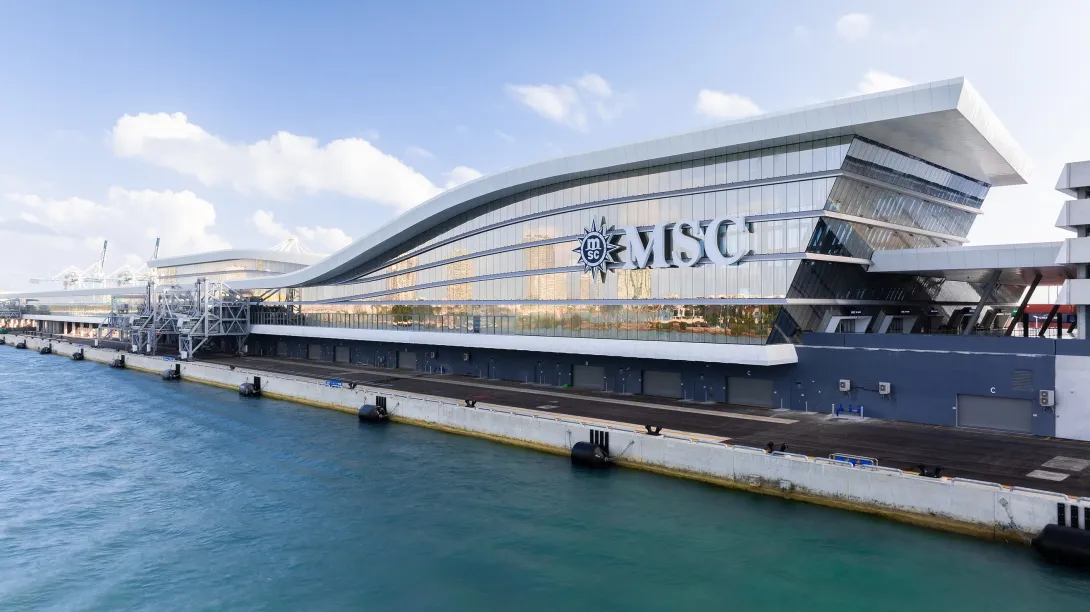
Modern Cruise Terminals: Designing the Future of Cruise, On Land
Cruise lines today recognize that the cruise experience begins on land, at the pier, before anyone ever sets foot on a ship. As a result, members of the Cruise Lines International Association (CLIA) and partners are investing in state-of-the-art, custom-designed cruise terminals that aim to both please the eye and move passengers from shore-to-ship with record ease.MSC Cruises’ new record-breaking terminal at PortMiami, which opened in the spring of 2025, was designed by Arquitectonica, the award-winning design firm that also created the Kaseya Center, where the Miami Heat play. Constructed by Fincantieri Infrastructure, a division of Italian shipbuilder Fincantieri Group, the terminal features a striking design with sweeping lines and massive walls of glass – not to mention an ability to process up to 36,000 passengers per day.Just to the west, PortMiami’s Terminal B was built by Norwegian Cruise Line, and opened in 2020. Inspired by a nautilus shell – and known as “The Pearl of Miami” for its distinctive curved design and colorful, illuminated walls of glass – the award-winning 190,000-square-foot structure is LEED Gold Certified for its sustainability and green efforts.Also in Florida, in 2021 Port Canaveral opened the ground-breaking Cruise Terminal 3, in conjunction with the launch of Carnival Cruise Line’s Mardi Gras – the first ship in North America to run on cleaner burning Liquified Natural Gas (LNG). The state-of-the-art facility is known as “Terminal Launch Pad,” reflecting the region’s ties to America’s space program.New tech enhances guest experiencesAs modern cruise terminals excite the eye, new technology is also improving the passenger experience.More than ever before, cruise terminals are equipped with new technology to swiftly embark and disembark thousands of passengers on turnaround days.Facial recognition technology allows guests to board and leave their cruise ships without the need to show passports or other documentation. With your information already on file, you just look at a screen – including to clear U.S. Customs and Immigration post-cruise.It’s estimated that the use of facial biometrics can reduce embarkation time by up to 50 percent – a monumental achievement considering today’s newest megaships hold 4,000-plus passengers.Other innovations include airport-style security scanners that streamline the security process, and digital signage that allows messaging to be updated and reproduced in multiple languages, instantly. For cruise lines catering to many passenger demographics and languages, signage flexibility is a crucial element of the passenger experience.Construction underway around the worldThe exciting new cruise terminal boom isn’t just confined to Miami. New terminals also include MSC’s new $156-million facility in Galveston, Texas – the fourth terminal in the city, with 165,000 square feet of space, a seven-story parking garage for guests (a first for Galveston), and two boarding bridges. The terminal hosts MSC and Norwegian Cruise Line ships.Next year, the port of Ravenna, Italy – which serves as a gateway to nearby Venice and Bologna – will open its first new terminal, designed in conjunction with Cruise Terminals International and Royal Caribbean Group. Available to all cruise lines, the nearly 11,000-square-foot facility will be the first LEED-certified cruise terminal in Italy, complete with onshore power supply (OPS), so cruise ships can plug into local power supply and reduce emissions in port.Antigua and Barbuda is cementing its status as a Caribbean homeport with a brand-new, modern terminal featuring such amenities as a day club with swimming pool and cabanas, dining and retail, and enhanced check-in and security areas. Partners for the project include Global Ports Holding (GPH). British line P&O Cruises’ homeported Arvia arrived at the new Antigua Cruise Port in November 2025. Full project completion is expected by June 2026.The city of Philadelphia is getting its own cruise terminal: the PhilaPort Cruise Terminal broke ground in December 2025 in preparation for the 2026 debut for Norwegian Cruise Line’s Norwegian Jewel. Norwegian Cruise Line has an exclusive seven-year agreement to homeport at the port, which is conveniently adjacent to the Philadelphia International Airport.© 2026 Cruise Lines International Association (CLIA). All rights reserved.This content may be shared or republished with clear attribution to Cruise Lines International Association (CLIA). Content must remain intact and may not be altered, edited, or excerpted in any way that changes its meaning or context. For additional permissions, media inquiries, or additional information, please email [email protected] 01 May, 2026